
In an era of billion-dollar ad budgets and AI-driven hyper-targeted marketing, it’s easy to think that the “old-school” ways of growing a business are dead. But here is a reality check: when was the last time you bought something because of a banner ad versus because a friend said, “You have to try this”?
Despite the digital noise, Word-of-Mouth (WOM) remains the most powerful marketing tool in existence. It’s the difference between a customer who “might” buy and a customer who is already sold before they even visit your website.
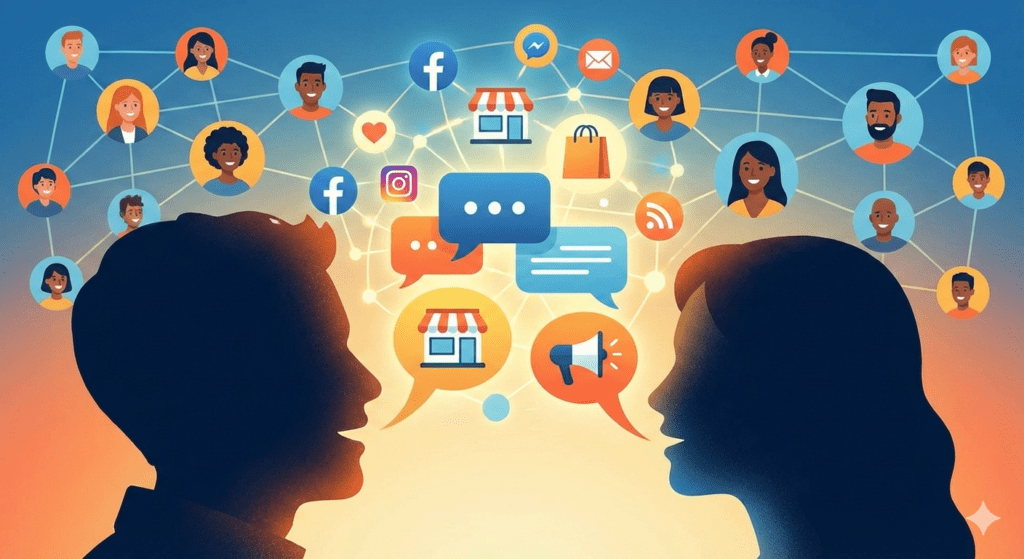
Why Word-of-Mouth Still Rules in 2026
The reason WOM remains the “holy grail” of marketing is simple: Trust. We are hardwired to value the opinions of our peers over the claims of a brand.
- Social Proof: People look to others to see what is “safe” or “cool” to buy.
- Lower Acquisition Costs: Organic referrals don’t require a “cost-per-click.”
- Higher Retention: Customers who come through referrals often have higher lifetime value because they already trust the brand.
The Stats Don’t Lie: According to various industry studies, consumers are up to 4x more likely to buy when referred by a friend, yet many businesses leave this to chance rather than making it a strategy.
4 Proven Strategies to Spark the Conversation
You don’t have to just sit back and hope people talk about you. You can—and should—create an environment that encourages it.
1. Be “Remarkable” (Literally)
If you want people to talk, you have to give them something worth remarking on. Standard service doesn’t get mentioned at dinner parties. Exceptional, “wow-factor” service does.
- Tip: Look for one small touchpoint in your customer journey to “plus up.” It could be a handwritten note or an unexpectedly fast delivery.
2. Build a Referral Program that Rewards Both Sides
If you ask for a favor, offer a “thank you.” The most successful referral programs (like Dropbox or Airbnb) reward both the referrer and the new customer.
- Example: “Give $20, Get $20.” This removes the “guilt” of the referrer feeling like they are “selling” to their friend.
3. Leverage User-Generated Content (UGC)
When a customer posts a photo of your product on social media, that is digital word-of-mouth.
- Action: Create a branded hashtag and actively resharing customer posts. People love being featured, and it shows potential buyers that real people love your stuff.
4. Create “Insider” Experiences
People love to be the first to know something. By giving your most loyal customers early access to new products or “behind-the-scenes” updates, you turn them into brand ambassadors.
Comparing WOM Strategies
| Strategy | Effort Level | Primary Benefit |
|---|---|---|
|
Referral Programs |
Medium |
Direct, trackable sales growth. |
|
Surprise & Delight |
Low |
High emotional loyalty and “viral” potential. |
|
UGC Campaigns |
Medium |
Builds a library of authentic social proof. |
|
Community Building |
High |
Long-term brand advocacy and defense. |
The Bottom Line
Word-of-mouth isn’t just about “getting lucky.” It is about consistently delivering so much value that your customers feel like they are doing their friends a favor by telling them about you. In a world of skepticism, your customers are your best sales team.