
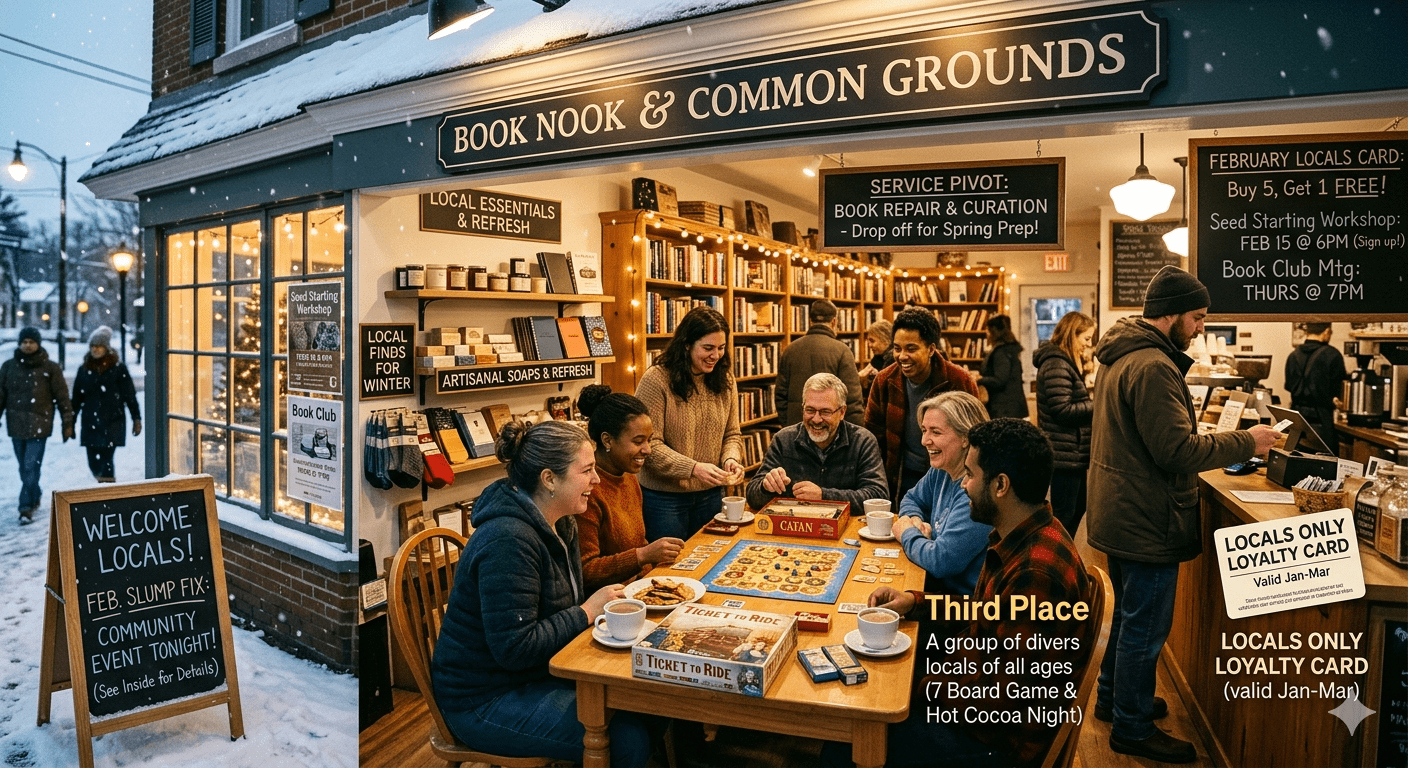
In a small town, our seasons aren’t just weather—they are economic cycles. We have the “Gold Rush” of the summer tourist season or the holiday harvest in December. But then comes February. The streets are quiet, the tourists are home, and the “Open” sign starts to feel a little lonely.
The secret to a sustainable small-town business isn’t just surviving the off-season; it’s pivoting to meet a different need. Here is how to transition from a “Tourist Destination” to a “Local Essential” when the temperature drops.
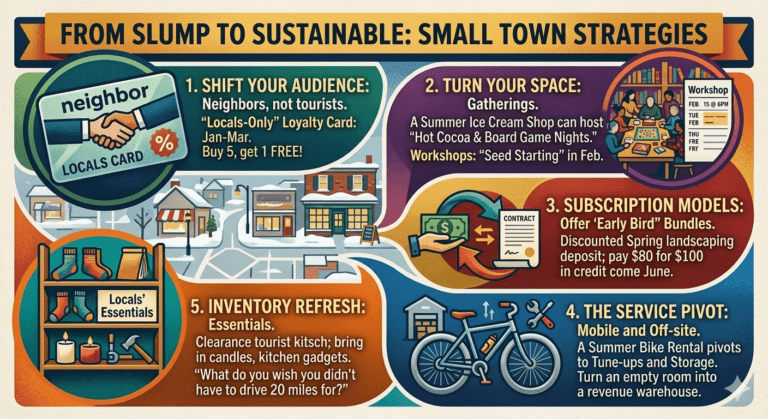
1. Shift Your Audience (From "Them" to "Us")
During the peak season, you market to visitors who want souvenirs and quick stops. In the off-season, your bread and butter is the neighbor who lives three blocks away.
The Strategy: Launch a “Locals-Only” Loyalty Card. Valid only from January to March, this card offers a “neighborly discount” or a “buy-five-get-one” deal. It rewards the people who support you 365 days a year and gives them a reason to choose you over a trip to the big-box store in the next county.
2. Turn Your Space into a "Third Place"
If you have floor space that isn’t being used by crowds, use it for connection. People get lonely in the winter; give them a reason to gather.
The Match: A Garden Center hosting “Seed Starting” workshops in February. A Summer Ice Cream Shop serving “Hot Cocoa & Board Game Nights.”
The Play: Don’t just sell a product; sell an activity. People will pay for the experience, and they’ll usually buy something off the shelf while they are there.
3. Subscription and "Pre-Season" Models
Revenue doesn’t have to happen at the moment of service. Use the slow months to bank capital for the busy ones.
The Strategy: Offer “Early Bird” Bundles. A landscaping company can offer a discount if the spring contract is signed and a deposit is paid in February. A boutique can sell “Summer Season Passes” (e.g., pay $\$80$ now for $\$100$ in credit come June).
4. The "Service Pivot"
If people aren’t coming to you, take your expertise to them.
The Match: A Summer Bike Rental Shop.
The Play: In the winter, pivot to Tune-up and Storage services. Offer to pick up bikes from locals’ garages, tune them up for the spring, and store them in your (now empty) rental space. You turn an empty room into a revenue-generating warehouse.
5. Inventory "Refresh" for Residents
Tourists buy “I Heart [Town]” t-shirts. Locals buy high-quality socks, candles, and kitchen gadgets.
The Strategy: Clear out the tourist kitsch in a “January Clearance” and bring in a limited run of daily essentials. Ask your regulars, “What do you wish you didn’t have to drive 20 miles to buy?” Then, stock it for the winter.
The Pivot Mindset
The off-season is the best time to innovate. Without the frantic pace of the summer rush, you have the time to talk to your customers, test new products, and build the relationships that make a business a “legacy.”
The Chamber Challenge: Look at your sales data from last February. What was your slowest day? This year, plan one “Locals Only” event or promotion for that specific day.